Why Do Dogs Destroy Their Toys? Practical Ways to Help
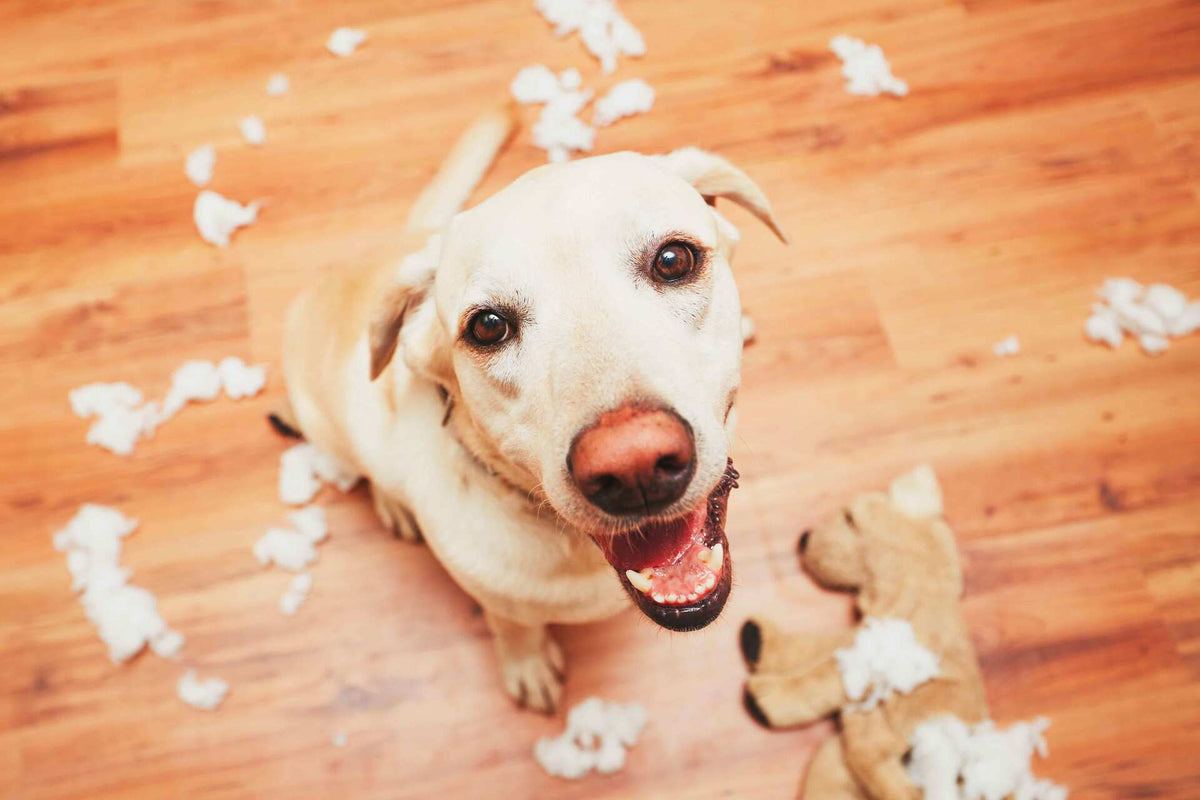
Some dogs carefully carry their toys around; others immediately look for the seam, pull out the stuffing or remove the squeaker. Destroying a toy can be normal play and chewing behaviour, but it does create a safety risk if pieces are swallowed.
Why do dogs destroy their toys?
Chewing is a normal behaviour
Dogs explore and interact with objects using their mouths. Puppies also chew while teething, and many adult dogs continue to find chewing enjoyable. Taking a toy apart is not necessarily a sign that your dog is “naughty”.
The toy itself is rewarding
A squeak, interesting texture or loose seam can encourage a dog to keep biting and pulling. Some dogs enjoy the process of finding the weak point and getting to the centre of a soft toy.
They need a different kind of activity
A dog may turn to vigorous chewing when they have energy to use or need more suitable opportunities to sniff, forage, play and solve simple problems. Exercise helps, but enrichment and rest are important too. More intense exercise is not always the answer.
The toy does not suit their play style
Dogs of any breed can be gentle or determined chewers. Choose toys based on your own dog’s size, chewing strength and behaviour rather than breed labels alone. A soft toy may be fine for supervised interactive play but unsuitable for prolonged chewing.
Stress or frustration may be involved
Repeated destructive behaviour can sometimes occur alongside difficulty settling, distress when left alone or other changes in behaviour. If the behaviour is sudden, extreme or accompanied by signs of anxiety, pain or illness, ask your vet for advice.
Is it safe for a dog to destroy toys?
The main danger is swallowing stuffing, fabric, rope, plastic or a squeaker. These pieces may cause choking or a blockage. Check toys regularly and remove them as soon as they are damaged, sharp or small enough to swallow.
Contact a vet promptly if you think your dog has swallowed part of a toy. Urgent signs can include repeated vomiting, retching, a painful or swollen abdomen, loss of appetite, unusual tiredness or difficulty passing stools. Do not try to make your dog vomit unless a vet tells you to.
How to make playtime safer
- Choose the right size: the toy should not fit fully inside your dog’s mouth.
- Match the material to the activity: keep softer toys for supervised play if your dog dismantles them quickly.
- Inspect before and after play: look for torn seams, loose pieces and sharp edges.
- Rotate toys: a smaller selection changed regularly can retain interest.
- Use toys together: games of fetch, tug and searching can be more satisfying than simply leaving a toy on the floor.
- Teach a friendly swap: offer a high-value reward in exchange for the toy rather than chasing or forcing it from your dog.
Give your dog safe outlets for chewing and foraging
Food toys, scatter feeding and simple scent games can add variety. You can also use part of your dog’s normal meal for enrichment. If you offer an edible chew, supervise it, provide water and count it towards the day’s food allowance.
Dewkes natural dog treats and chews can be used for reward-based swaps or supervised enrichment. Pick a product and portion suited to your dog rather than using food to distract them every time they play.
When to get extra help
Speak to your vet if destructive chewing appears suddenly, your dog damages teeth or gums, tries to eat non-food objects, or shows signs of distress. A qualified, reward-based behaviour professional can help where the issue is linked to fear, frustration or difficulty being left alone.