What Is Hypoallergenic Dog Food? A Practical Guide
“Hypoallergenic” appears on many dog food labels, but it does not mean that a food can never cause a reaction. It generally describes a recipe designed to avoid certain ingredients that commonly cause sensitivities, or to use a limited or unusual protein source.
Food allergy or food intolerance?
A food allergy involves the immune system. A food intolerance can cause unpleasant symptoms without an immune reaction. Both can be difficult to identify because itching and digestive upset have many possible causes.
Possible signs of a food reaction
- persistent itching, licking or chewing
- repeated ear or skin problems
- vomiting or diarrhoea
- frequent wind or digestive discomfort
These signs do not prove that food is responsible. Fleas, environmental allergies, infections and other health problems can look similar, so speak to your vet before excluding ingredients.
How hypoallergenic dog food works
Different products take different approaches. A recipe may use a protein your dog has not eaten before, a shorter ingredient list, or hydrolysed protein that has been broken into very small pieces. Grain-free and hypoallergenic are not the same thing: grains are suitable for many dogs, and a grain-free recipe can still contain a protein that triggers a reaction.
How a veterinary food trial works
The most reliable way to investigate a suspected food allergy is a carefully controlled elimination diet arranged with your vet. For the trial period, your dog must eat only the agreed food and permitted treats. Even small extras can make the result difficult to interpret.
Your vet will tell you how long the trial should last and whether ingredients should later be reintroduced. Do not start a restrictive home-made diet without professional guidance, particularly for puppies.
Choosing a food for a sensitive dog
- Check that the food is labelled complete for your dog’s life stage.
- Read the full ingredient list rather than relying on front-of-pack terms.
- Choose a recipe that fits the plan agreed with your vet.
- Keep treats, chews and flavoured medicines in mind.
- Change food gradually unless your vet advises otherwise.
Dewkes options for sensitive dogs
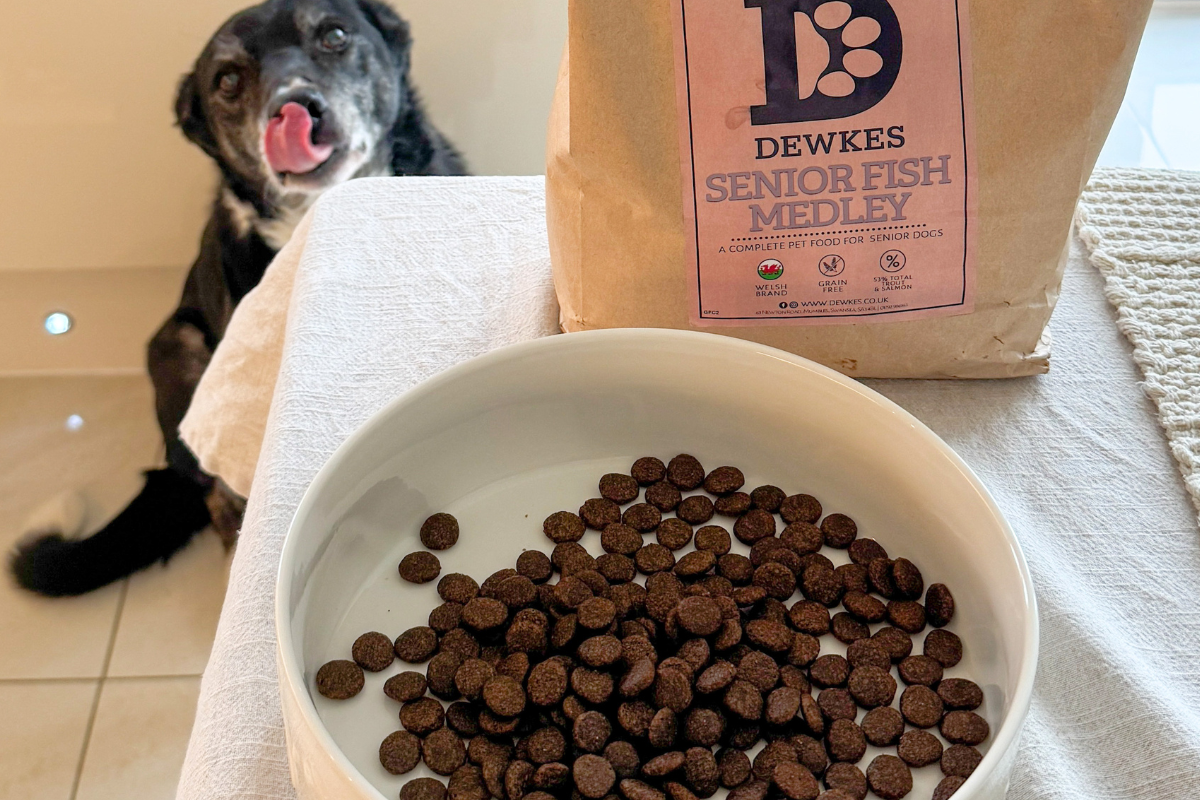
Dewkes offers grain-free complete dry dog food in a choice of recipes, including options made with less commonly used protein sources. Clear ingredient lists make it easier to compare recipes and find an option that suits your dog.
However, an over-the-counter recipe is not a substitute for a veterinary elimination diet. If your dog has ongoing itching, ear trouble, vomiting or diarrhoea, ask your vet for advice before switching foods.
Changing your dog’s food
For a routine change, introduce the new food gradually over about 7–14 days, increasing the new portion while reducing the old one. Slow down and contact your vet if symptoms are persistent, severe or accompanied by lethargy, pain, blood, dehydration or weight loss. Read our tips on introducing a new dog food here >
Further reading: PDSA guidance on food allergies in dogs.