What Can Dogs Eat at Christmas? A Festive Food Safety Guide
Dogs can share a few plain parts of Christmas dinner, but most festive dishes contain several ingredients rather than just one. The safest approach is to set aside a small, unseasoned portion before butter, gravy, stuffing or sauces are added.
What can dogs eat from a Christmas dinner?
For a healthy adult dog, small amounts of the following are generally suitable when fully cooked and served plain:
- Turkey or chicken: boneless, skinless meat with no seasoning, gravy or stuffing.
- Lean beef: fully cooked, with visible fat removed.
- Salmon: cooked, boneless and unseasoned; avoid smoked salmon because it is salty.
- Carrots, green beans and parsnips: plain and cut into manageable pieces.
- Potato: plain, cooked potato without butter, salt, oil or goose fat.
Keep the portion small and remember that extras count towards your dog’s daily food allowance. Dogs with allergies, pancreatitis, digestive problems or prescription diets should stick to the plan agreed with their vet.
Christmas foods best left off the dog’s plate
Some foods are not necessarily poisonous but are rich, salty or difficult to serve safely. These include fatty meat and skin, pigs in blankets, roast potatoes cooked in fat, Yorkshire puddings, cheese and rich sauces. They can cause digestive upset and may be particularly risky for dogs with certain health conditions.
Bread offers little benefit, and large pieces of hard food or nuts can also create a choking hazard. There is no need for your dog to have a human-sized Christmas dinner: their usual complete food should remain the main meal.
Christmas foods that can be toxic or dangerous to dogs
- Onion, garlic, leeks and chives: all members of the allium family can harm dogs, whether raw, cooked, dried or powdered. They often appear in stuffing, gravy and stock.
- Grapes, raisins, currants and sultanas: these can cause kidney failure and are found in mince pies, Christmas pudding and fruit cake. The harmful amount is unpredictable, so any suspected ingestion needs urgent veterinary advice.
- Chocolate: the risk depends on the type, amount and size of the dog. Dark chocolate and cocoa contain more theobromine, but any suspected ingestion should be discussed with a vet.
- Alcohol: drinks and alcohol-containing desserts must be kept out of reach.
- Xylitol: also called birch sugar, this sweetener may be present in sugar-free products and can cause a dangerous drop in blood sugar.
- Macadamia nuts: these are toxic to dogs.
- Blue cheese and mouldy food: mould toxins can cause serious illness, including tremors and seizures.
- Cooked bones: these can splinter and cause choking, obstruction or internal injury.
Can puppies have Christmas dinner?
Puppies do not need festive food and changes can upset their digestion. If you want to include them, offer a very small piece of plain, boneless meat only if it is suitable for their current diet. Keep their normal complete puppy food as the main meal.
What to do if your dog eats something harmful
Contact your vet immediately if your dog may have eaten a toxic food. Do not wait for symptoms and do not make your dog vomit unless a vet specifically instructs you. Keep the packaging and be ready to explain what was eaten, how much, and when.
A safer Christmas treat for your dog
A measured portion of familiar dog food or treats made specifically for dogs is easier to manage than a plate of mixed leftovers. Dewkes offers natural dog treats and chews that can help your dog join the celebration without sharing seasoned human food.
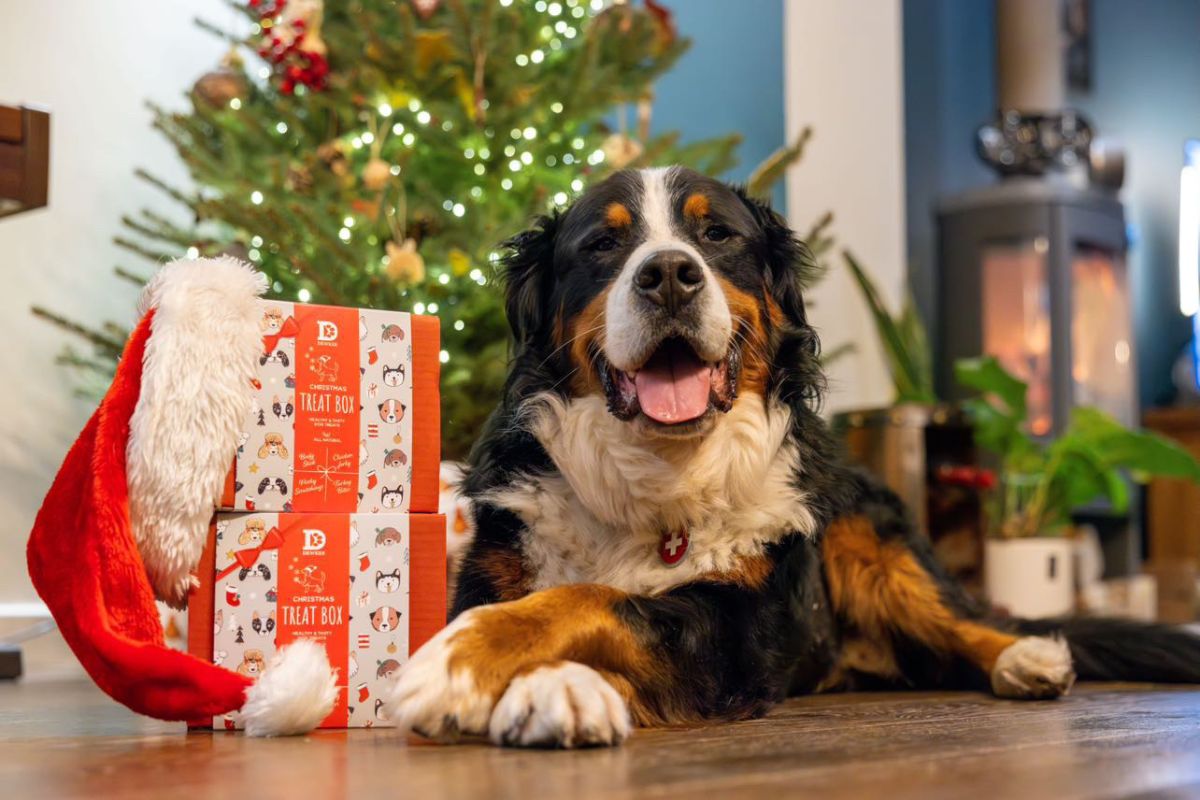
Dewkes Christmas Dog Treat Gift Box
The Dewkes Christmas Dog Treat Gift Box is another festive option. Its contents are made for dogs and include a selection of proper dog treats, plus a portion of Dewkes “Christmas Dinner” dog food made with turkey and cranberry. It gives your dog something special of their own while the family eats, without offering stuffing, gravy, cooked bones or other unsuitable parts of a human Christmas dinner.
Quick Christmas dinner checklist
Introduce unfamiliar foods gradually, follow the feeding guidance and check that each item suits your dog’s age, size and dietary needs. Supervise treats and chews, provide fresh water and include them within your dog’s usual daily food allowance.
- Set aside food before seasoning or sauces are added.
- Remove skin, fat and every bone.
- Keep portions small.
- Secure bins, leftovers, chocolates and wrapped food.
- Call your vet promptly after any suspected poisoning.