Prebiotics for Dogs: What Are MOS and FOS?
If you have spotted MOS and FOS on a dog food label, you may reasonably wonder what they are. Both are types of prebiotic used in some dog foods to support a healthy digestive system.
The abbreviations sound technical, but the basic idea is simple: prebiotics provide nourishment for beneficial bacteria already living in the gut.
What are prebiotics for dogs?
Prebiotics are ingredients that are used by certain bacteria in the digestive system. They help support the balance and activity of the gut’s existing bacterial community.
They are different from probiotics:
- Prebiotics provide a food source for beneficial gut bacteria.
- Probiotics contain live microorganisms.
Some products contain one, the other or a combination, but the terms should not be used interchangeably.
What does FOS mean in dog food?
FOS stands for fructooligosaccharides. These are fermentable fibres that pass through the upper digestive system and can be used by bacteria in the large intestine.
In dog food, FOS is included to help support a healthy intestinal environment and normal digestion.
What does MOS mean in dog food?
MOS stands for mannan-oligosaccharides. MOS is commonly derived from the cell walls of yeast and is used as a functional ingredient in animal nutrition.
It is included in some dog foods to support digestive health and the normal balance of gut bacteria.
Are prebiotics the same as fibre?
Prebiotics are a particular type of ingredient used by gut bacteria. Not every source of dietary fibre is a prebiotic, although different fibres can still play useful roles in digestion and stool quality.
A well-formulated dog food may contain several ingredients contributing different types of fibre.
Does every dog need a prebiotic supplement?
No. A healthy dog eating a complete, balanced food does not automatically need an additional supplement.
Prebiotics can already be included within the main food. Adding several supplements without understanding the complete diet may be unnecessary and can make it harder to know what is affecting your dog.
If your dog has ongoing digestive problems, recurrent diarrhoea, vomiting, weight loss or a marked change in appetite, speak to your vet. A supplement is not a substitute for finding the cause.
Can prebiotics stop diarrhoea?
Prebiotics are used to support digestive health, but they are not a treatment for every cause of diarrhoea. Dogs can develop loose stools for many reasons, including a sudden food change, eating something unsuitable, parasites, infection or an underlying health condition.
Contact your vet if diarrhoea is severe, persistent, contains blood, affects a puppy or vulnerable dog, or is accompanied by vomiting, lethargy, pain or refusal to drink.
How can you support your dog’s digestion?
- Choose a complete food suitable for their life stage
- Change food gradually rather than overnight
- Feed measured portions
- Keep treats and table scraps under control
- Provide fresh drinking water
- Maintain a consistent routine
- Ask your vet about persistent digestive symptoms
MOS and FOS in Dewkes dog food
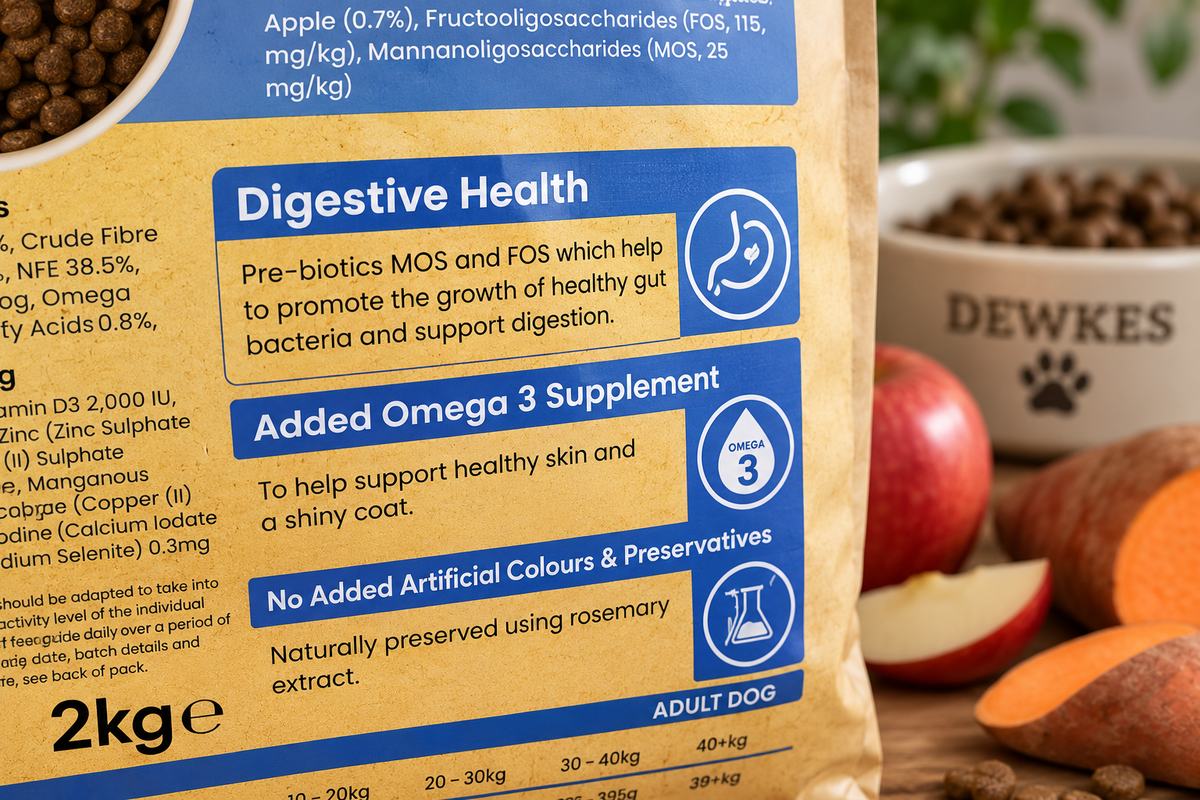
Recipes across the Dewkes grain-free dry dog food range include prebiotics MOS and FOS to support healthy digestion.
Our recipes are made with freshly prepared meat or fish, sweet potato and selected ingredients, with options for puppies, adult dogs, senior dogs and small breeds. Product pages contain the full composition and nutritional information for each recipe.
If you are introducing any new food, including one containing prebiotics, make the change gradually. Our guide to introducing new dog food includes a practical 7–10 day transition plan.
Prebiotics in plain English
MOS and FOS are ingredients included to support the community of bacteria in your dog’s digestive system. They are one part of a complete recipe—not a cure-all and not something that needs to sound mysterious.
You can try Dewkes dog food from £1 and explore the ingredient information for each recipe before choosing a larger bag.