How to Read a Dog Food Ingredients List
Dog food labels contain plenty of information, but they are not always easy to understand at first glance. Ingredients, composition, analytical constituents and nutritional additives all tell you something different.
This guide explains what to look for without turning your weekly shop into a science lesson.
Start with “complete” or “complementary”
First, check whether the product is labelled as complete or complementary.
- Complete dog food is designed to provide all the nutrients your dog needs when it is suitable for their life stage and fed as instructed.
- Complementary dog food is intended to be fed with other foods or given in limited amounts. Many treats, chews and toppers fall into this category.
Your dog’s main everyday food will usually need to be complete.
What does “composition” mean on dog food?
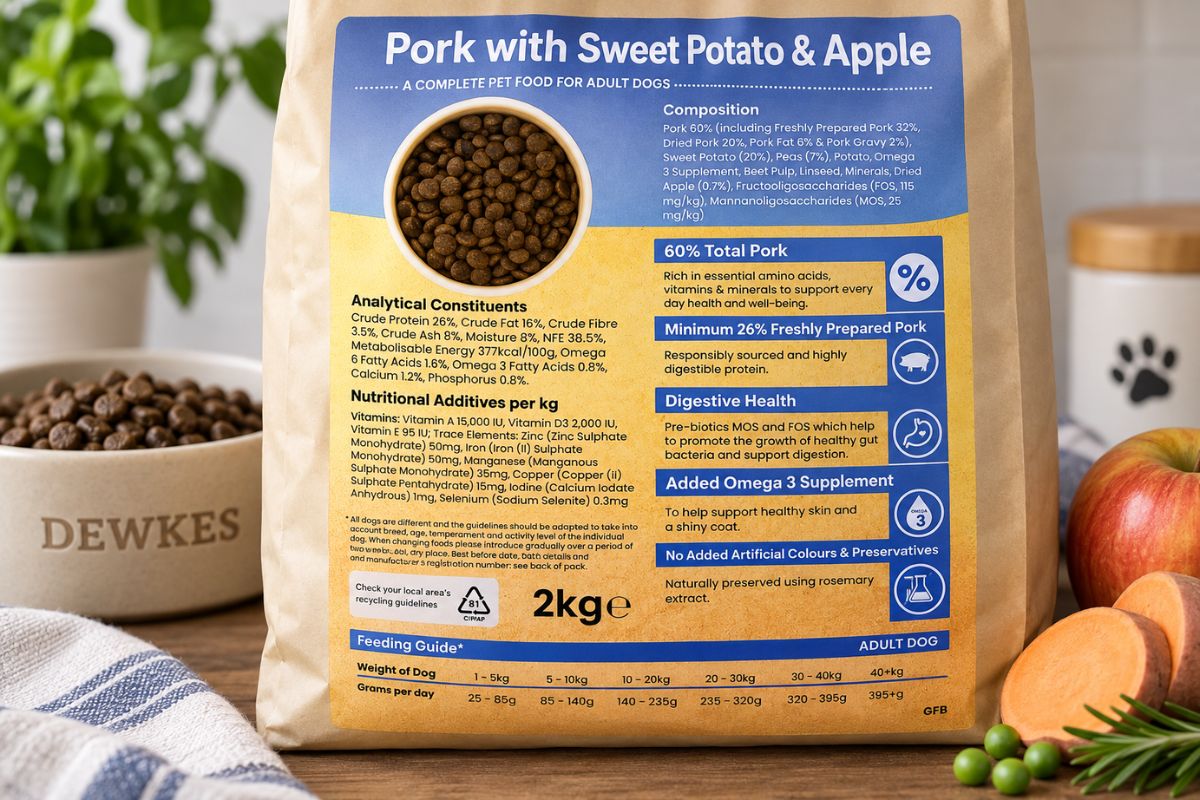
The composition is the ingredient list. Ingredients are normally listed in descending order by weight, starting with the ingredient present in the greatest amount when the recipe is made.
Bear in mind that fresh ingredients contain water. That means the position of freshly prepared meat in a list cannot always be compared directly with a concentrated dried ingredient simply by looking at the order.
Look at the protein source
The label should help you understand which animal protein sources are included. Some recipes use familiar proteins such as chicken or lamb, while others offer fish, duck, pork or venison.
There is no single protein that suits every dog. Taste, digestibility, life stage and any professionally diagnosed dietary needs all matter.
Dewkes recipes include clearly named flavour choices such as Very Venison, Lamb Lunch, Fish Medley, Pork Dinner and Duck A L’Orange.
What are analytical constituents?
Analytical constituents describe broad nutrient groups in the finished food. Dog food labels commonly show:
- Crude protein: an overall measure of protein
- Crude oils and fats: the fat content
- Crude fibre: a measure of certain types of fibre
- Crude ash: an estimate of the total mineral content
- Moisture: the water content, which may be declared depending on its level
Does “ash” mean ash has been added?
No. Crude ash does not mean fireplace ash has been added to the food. It is the term used for the mineral content that remains when a sample is analysed.
Those minerals can include calcium, phosphorus and others that form part of a balanced diet.
Can you compare wet and dry food percentages directly?
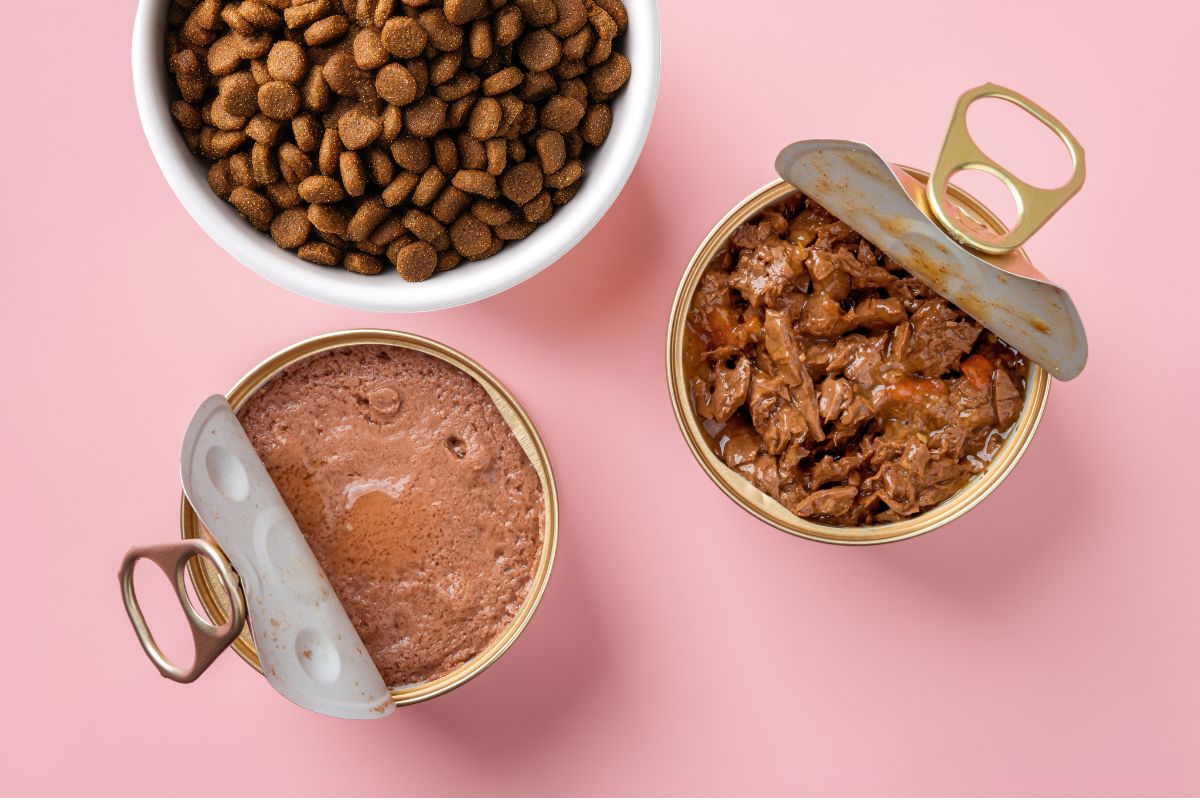
Not always. Wet food contains much more water than dry food, so its protein and fat percentages can look lower even when that difference is largely caused by moisture.
For an accurate nutritional comparison between foods with very different moisture levels, figures need to be considered on a dry-matter basis. For most everyday buying decisions, first check that the food is complete and suitable for your dog, then compare similar food formats.
What are nutritional additives?
Nutritional additives can include vitamins, minerals and trace elements added to help create a complete, balanced recipe. The word “additive” does not automatically mean something unnecessary or undesirable.
Other permitted additives may help preserve the food, maintain its quality or provide a particular technical function. Look at what is actually listed rather than judging the recipe from one word.
What do grain-free and hypoallergenic mean?
Grain-free means the recipe has been made without grains such as wheat, maize or rice. It is not essential for every dog, but some owners choose grain-free food because it suits their preferences or their individual dog.
“Hypoallergenic” does not mean a food is guaranteed never to cause a reaction. If you suspect a true food allergy, speak to your vet. Identifying an allergy usually requires a controlled food trial rather than choosing a product from the front-of-pack wording alone.
What else should you check?
- The dog’s intended age or life stage
- The feeding guide
- Storage instructions
- The best-before date and batch information
- Whether the portion and cost work for your dog
- Any veterinary guidance relevant to your dog
Reading a Dewkes dog food label
The Dewkes grain-free dry dog food range is made with freshly prepared meat or fish, sweet potato and carefully selected ingredients. Our recipes contain no added artificial colours or preservatives and are naturally preserved using rosemary extract.
Depending on the recipe, you will also find ingredients such as prebiotics MOS and FOS, and omega-3. Full composition, analytical constituents and feeding information are available on each product page.
The simplest way to choose
Look beyond a single headline claim. Choose a complete food suitable for your dog’s life stage, read the full label, follow the feeding guide and pay attention to how your dog gets on with it.
If flavour is the difficult part, try a Dewkes dog food taster pack from £1 before buying a full-size bag.