Why Does My Dog Eat So Fast? Ways to Slow Them Down
Some dogs finish a meal in seconds. Fast eating is common, but gulping large mouthfuls can lead to coughing, choking, regurgitation or digestive discomfort. A sudden change in appetite can also have a medical cause, so it is worth looking at the whole picture.
Why does my dog eat so quickly?
- Competition: dogs may rush if another pet is nearby or has approached their bowl before.
- Habit and excitement: some dogs are highly food-motivated and have learned to eat as soon as food appears.
- Hunger: an unsuitable portion or long gap between meals may contribute.
- Medical reasons: parasites, medication and some health conditions can increase appetite.
Speak to your vet if the behaviour starts suddenly, your dog seems constantly hungry, or you notice weight change, vomiting, diarrhoea, increased thirst or low energy.
Do dogs need to chew every piece?
Dogs do not chew food in the same way people do, and swallowing some kibble whole is not unusual. The concern is the speed and amount swallowed, especially if your dog coughs, chokes, vomits or appears uncomfortable.
Practical ways to slow down mealtimes
Use a suitable slow-feeder bowl
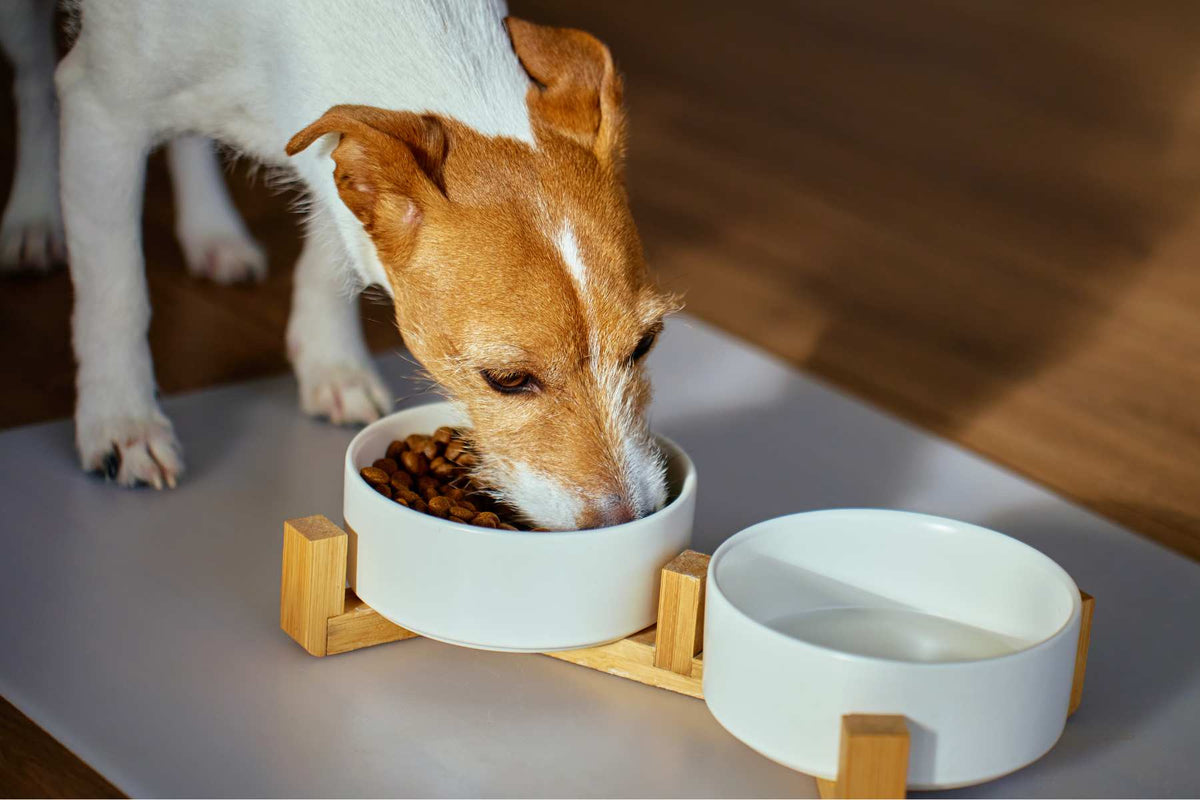
A well-designed slow feeder creates small obstacles around the food. Choose one appropriate for your dog’s muzzle and size, make sure it cannot slide, and supervise the first few meals.
Try a puzzle feeder or scatter feeding
A food puzzle can turn a meal into a sniffing activity. You can also scatter dry food across a clean snuffle mat or safe area. Avoid scatter feeding where several dogs could compete.
Split the daily allowance
Dividing the same daily amount into two or more meals can reduce the volume eaten at once. Do not increase the total amount unless advised.
Feed pets separately
Give each dog a calm space and remove bowls when they finish. This can reduce rushing and helps prevent conflict or food guarding.
Check the portion
Weigh meals and compare the amount with the food’s feeding guide, then adjust for treats, activity and body condition. Ask your vet or vet nurse if you are unsure.
What not to rely on
Changing to grain-free food does not make a dog eat more slowly, and kibble shape alone is not a reliable solution. Avoid placing loose balls, stones or other objects in the bowl because they can create a choking or dental risk. Use a purpose-made feeder instead.
When fast eating needs urgent help
Contact a vet immediately if your dog is choking, struggling to breathe, collapsing, repeatedly trying to vomit without bringing anything up, or has a swollen abdomen. These signs can indicate an emergency.
Choosing food for a fast eater
The priority is a complete food that suits your dog, served in a measured amount and a safe way. Dewkes offers complete dry dog food in several recipes, plus a 100g taster pack if you want to find a flavour your dog enjoys. A slow feeder or puzzle toy can then help control the pace.