How to Choose the Right Treats for Your Dog
The best dog treat is not simply the one with the most appealing packet. It is the one that suits your dog, fits the occasion and can be included without unbalancing their normal diet.
This practical guide explains what to look for when choosing dog treats for training, everyday rewards and supervised chewing.
Start with your individual dog
Before buying a treat, consider your dog’s age, size, health and chewing style. Puppies may need softer, smaller pieces. Senior dogs may find very hard chews uncomfortable. Dogs with allergies, digestive problems, dental disease or a prescription diet may need advice from a vet before trying something new.
Read the whole ingredient list
Choose a product with ingredients you understand and check the label for anything your dog needs to avoid. A short ingredient list can be convenient, especially when monitoring a known sensitivity, but fewer ingredients do not automatically mean that a treat is nutritionally better.
If a product is described as “natural”, still check its ingredients, feeding guide and calorie information. Marketing words are less useful than the details on the label.
Choose the right treat for the job
Dog training treats
Training treats should be small, appealing and quick to eat. Breaking a larger treat into tiny pieces lets you reward your dog often without repeatedly stopping the session. Softer treats can be useful when speed matters.
Everyday rewards
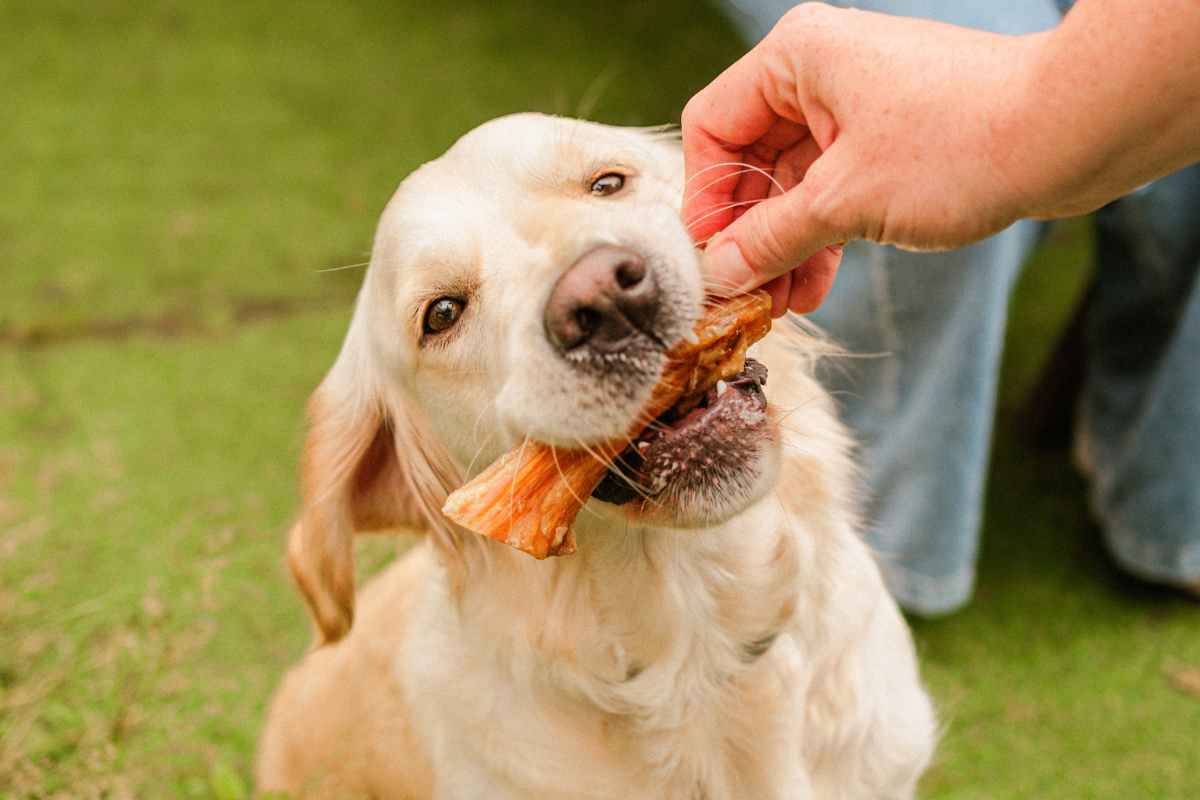
An occasional biscuit, meat strip or crunchy snack can mark good choices at home. Adjust the portion to your dog: the same full-sized treat can represent a very different share of the daily allowance for a small dog and a large dog.
Chews and enrichment
Chewing and food toys can provide an engaging activity, but choose an appropriate size and supervise throughout. Remove a chew if it splinters, develops sharp edges or becomes small enough to swallow. If your dog tries to gulp large pieces, choose a different activity.
Keep treats within the daily allowance
Treats should generally account for no more than 10% of your dog’s daily food allowance. If you use plenty of rewards during training, reduce their main food appropriately or use part of their usual meal as rewards.
For a more tailored starting point, use the Dewkes dog food calculator, then remember to account for any treats separately.
Introduce a new treat gradually
Offer a small piece first, particularly if your dog has a sensitive stomach. Avoid introducing several new foods at once, as that makes it harder to work out what caused a problem. Stop the treat and speak to your vet if you notice persistent vomiting, diarrhoea, itching, swelling or other concerning symptoms.
A simple dog treat checklist
- Is it suitable for your dog’s age, size and health?
- Are the ingredients clearly listed?
- Is the texture right for training, rewarding or chewing?
- Can you divide it into a sensible portion?
- Will it keep total treats within the daily allowance?
- Can you supervise your dog while they eat it?
Choosing Dewkes dog treats
The Dewkes range includes natural dog treats, small training rewards and pure meat options, so you can choose according to the moment rather than relying on one treat for everything. Check each product page for ingredients and feeding information, then select a size and texture that suits your dog.