Article: 7 Christmas Enrichment Activities and Training Games for Dogs
7 Christmas Enrichment Activities and Training Games for Dogs
Christmas can be an exciting time for dogs. There are visitors arriving, presents being opened, tempting smells coming from the kitchen and everyday routines often changing.
Although some dogs love being at the centre of the festivities, others can find all the extra activity overwhelming. Having a few simple dog enrichment activities planned can help keep them occupied, give them an appropriate outlet for their energy and provide a little quiet time away from the Christmas chaos.
You don’t need expensive equipment or hours of preparation. These Christmas activities for dogs use things you probably already have at home, along with some suitably tasty treats.
1. Make a treat-filled blanket bundle
This simple enrichment game gives your dog a puzzle to unravel, and a delicious reason to keep trying.
Lay an old blanket or towel flat and scatter a few small treats across it. Dewkes Fishy Bites or our pure meat dog treats work particularly well because they’re small, tasty and easy to hide.
Next, loosely roll, fold or scrunch the blanket around the treats. You can leave it as a simple roll for beginners or loosely tie it into a large knot or bundle for dogs who need more of a challenge.
Place the bundle on the floor and encourage your dog to sniff, nudge and unroll it to find the treats hidden inside.
Make it easier
Start with the treats partly visible and fold the blanket very loosely. You can also place a treat at the opening to encourage your dog to begin investigating.
Make it harder
Once your dog understands the game, fold the blanket in different directions or create a loose knot they need to unravel.
Always supervise this activity. The aim is for your dog to use their nose and paws to open the bundle, not to tear or eat the blanket. Keep knots loose enough to unravel and stop the game if your dog becomes frustrated or starts chewing the fabric.
2. Create a Christmas treat treasure hunt
A treat treasure hunt is one of the easiest enrichment activities for dogs and can be adapted to suit almost any age or ability.
Ask your dog to wait in another room while you hide several treats around a safe area of your home. Start with easy locations, such as beside a chair leg, near their bed or partly underneath a toy.
Bring your dog back into the room and use a cue such as “find it” to begin the search.
The first time you play, let your dog watch you place a couple of the treats so they understand what they’re looking for. As they become more confident, you can use less obvious hiding places or spread the hunt across several rooms.
Small, aromatic treats such as Fishy Bites are particularly useful because their scent helps dogs locate them without needing to see them.
Remember where you’ve hidden everything and collect any treats your dog doesn’t find—particularly before allowing other pets or young children into the room.
3. Turn the Christmas boxes into a sniffing game
Once the presents have been opened, save a few clean cardboard boxes for another easy dog enrichment activity.
Place several open boxes on the floor and drop a treat into one or two of them. Allow your dog to sniff the boxes and work out where the treats are hidden.
Once your dog understands the game, you can make it more interesting by adding scrunched pieces of plain paper or placing smaller boxes inside larger ones. Hide a few treats between the layers for your dog to discover.
Avoid boxes that contained food, cleaning products or anything potentially harmful. Remove staples, tape, ribbons and plastic packaging before starting, and supervise your dog throughout the activity.
If your dog likes to eat cardboard rather than investigate it, choose a different game.
4. Teach your dog to unwrap a present
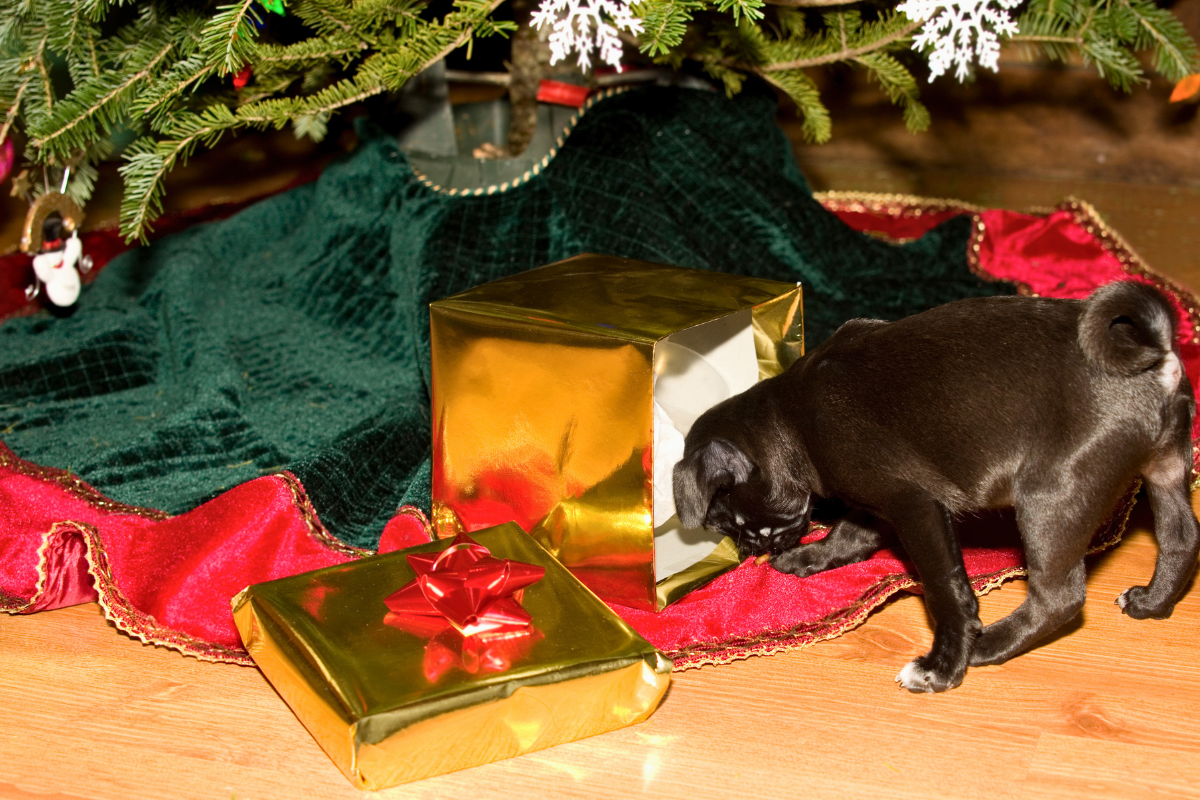
Unwrapping presents can be part of the fun for dogs too, as long as it’s done safely.
Loosely wrap a toy or packet of treats in plain, uncoated paper. Leave an opening so your dog can smell what is inside and encourage them to investigate.
Reward any gentle interaction with the parcel, such as sniffing, nudging or touching it with a paw. Gradually encourage them to pull at the paper until they discover their present.
Avoid sticky tape, ribbons, bows, gift tags and foil-coated wrapping paper. Supervise closely and remove the discarded paper before your dog decides to eat it.
It’s also worth using a specific cue, such as 'open it' so your dog learns that only certain parcels are theirs. Otherwise, they may decide to practise their new skill on everybody else’s Christmas presents.
5. Play festive hide-and-seek
Hide-and-seek combines mental stimulation, physical activity and recall training, making it a brilliant game for dogs to play indoors.
Ask somebody to hold your dog or encourage them to wait while you hide somewhere in the house. Start somewhere easy, such as behind a door or beside the sofa.
Call your dog’s name once and wait for them to find you. When they do, reward them with praise and a small treat.
As your dog gets better at the game, try more difficult hiding places or ask different family members to take turns.
This is also a useful opportunity to practise recall in a fun, low-pressure setting. One of the most important dog training tips is to make coming back to you consistently rewarding—so be enthusiastic when your dog finds you.
6. Teach a useful Christmas trick
The quieter days around Christmas can be a good opportunity to teach your dog a new skill.
You could practise:
- Putting toys into a basket
- Touching your hand with their nose
- Going to their bed
- Bringing you a named toy
- Giving a paw
- Waiting before taking a treat
Keep each training session short, around three to five minutes is often enough. Finish while your dog is still interested rather than waiting until they become bored or frustrated.
Use small treats so you can give several rewards without overfeeding. Dewkes pure meat treats are particularly useful for training because their small size makes them easy to deliver quickly, while their meaty flavour can help hold your dog’s attention.
Break the activity into small steps and reward progress rather than expecting your dog to understand the finished behaviour immediately.
7. Practise settling on a blanket
Enrichment isn’t only about keeping dogs busy. Learning to relax while family life continues around them is also a valuable skill, especially during a busy Christmas gathering.
Place a comfortable blanket or mat in a quiet area and reward your dog whenever they choose to stand, sit or lie on it. Gradually begin rewarding calm behaviour, such as lying down or resting their head.
Once your dog associates the blanket with relaxing, you can practise while people are talking, eating or opening presents nearby.
Don’t use the blanket as a punishment or send your dog there only when they’re overexcited. The aim is to create a comfortable, positive place where they can settle voluntarily.
Your dog should also have access to a genuinely quiet area away from guests, children and other pets whenever they need it.
Dog training tips for successful Christmas activities
Whichever activities you try, keep the experience enjoyable and suited to your individual dog.
- Begin with an easy version of each game.
- Use small treats and count them as part of your dog’s daily food allowance.
- Keep training sessions short and positive.
- Give your dog time to work things out for themselves.
- Avoid repeatedly giving instructions if they’re concentrating on a puzzle.
- Stop if your dog becomes frustrated, worried or overexcited.
- Supervise games involving blankets, paper, boxes or other household objects.
- Choose activities appropriate for your dog’s age, health and mobility.
Some dogs solve enrichment games very quickly, while others need more encouragement. There’s no need to rush or make every activity increasingly difficult, the goal is for your dog to enjoy taking part.
A little extra fun for your dog this Christmas
Christmas enrichment activities are a simple way to include your dog in the festivities while giving them something positive to focus on.
A blanket bundle or treat hunt can keep an inquisitive dog busy, a short training game provides valuable one-to-one time, and practising how to settle can help make a busy household feel more manageable.
You can use part of your dog’s usual food for these activities or make the games more rewarding with Dewkes Fishy Bites and our pure meat dog treats. Their small size makes them ideal for hiding, rewarding and training without interrupting the game.
Whichever activity becomes your dog’s favourite, the most important part is the time you spend enjoying it together.