
How to Train Recall in Dogs: A Step-by-Step Guide
Reliable recall means your dog turns away from distractions and returns when called. It is an important safety skill, but it develops through repeated, rewarding practice—not by testing a dog in situations they are not ready to handle.
What do you need for recall training?
- A short, clear cue such as “come” or “here”
- Small rewards your dog genuinely values
- A secure, low-distraction place to begin
- A comfortable harness and long training line for later outdoor practice
- Patience and short sessions
Step 1: Choose one recall cue
Pick a word the household can use consistently. Avoid repeating it when you know your dog is unlikely to respond. If an old cue has been ignored many times, choosing a fresh word can help you build a new association.
Step 2: Start very close
Begin indoors. Say the dog’s name once, use the recall cue and move backwards slightly. When they come to you, reward immediately and allow them to move away again.
Keep the first sessions easy. Five successful recalls are more useful than one long session ending in frustration.
Step 3: Make returning worthwhile
Use a reward that competes with the environment. This may be a small piece of food, a favourite toy or a quick game. Vary rewards so returning remains interesting.
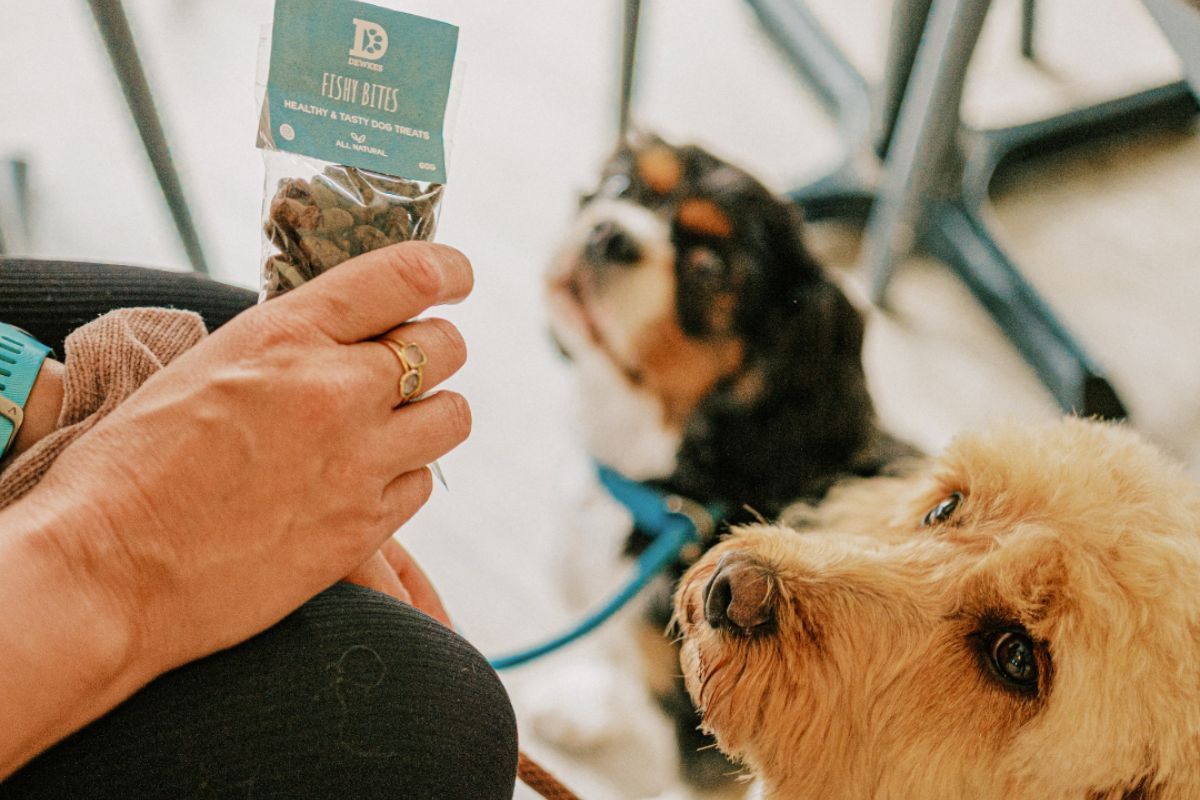
Dewkes natural training treats are small and quick to eat, making them practical for repeated rewards. The reusable tin also keeps them accessible on walks. Count training food within the daily allowance.
Step 4: Practise between two people
Stand a short distance apart in a secure area and take turns calling the dog. Reward each arrival. Do not have both people call at once, and stop while the dog is still enjoying the game.
Step 5: Add distance gradually
Increase the distance by only a few steps at a time. If your dog stops responding, make the next repetition easier rather than repeating the cue more loudly.
Step 6: Introduce mild distractions
Practise in the garden, then in a quiet outdoor space. Add one manageable distraction at a time. A dog who recalls in the kitchen may not yet understand the cue near other dogs, wildlife or exciting smells.
How to use a long line safely
Attach the training line to a well-fitting harness, not a collar. Let it trail or hold it with plenty of slack in a safe open area away from roads. Wear gloves if appropriate and avoid wrapping the line around your hand.
The line prevents the dog from running off while you practise. It should not be used to jerk them back. Call once, encourage movement towards you and reward success.
Do not end every good recall with the lead
If coming back always means the fun stops, your dog may hesitate. Call them, reward them and release them to sniff or play again when it is safe. Practise clipping the lead on, rewarding and then unclipping it.
What should you do if your dog ignores you?
- Do not chase or punish them when they eventually return.
- Move away, crouch or use a playful voice to become more interesting.
- Reduce the distance or distraction next time.
- Use the long line until success is consistent.
- Choose a better reward for difficult environments.
Common recall mistakes
- Repeating the cue until it becomes background noise
- Calling only to end play or leave the park
- Progressing to busy places too quickly
- Scolding the dog after they return
- Letting a dog off lead before recall is reliable
- Expecting the same response around every distraction
When is a dog ready to be off lead?
There is no single pass mark. Your dog should respond consistently in several safe environments and around realistic distractions. Even a well-trained dog may need to remain on lead near roads, livestock, wildlife, unfamiliar dogs or where local rules require it.
Some dogs should use a long line indefinitely because of strong chase behaviour, fear or other risks. Safety matters more than proving that a dog can be off lead.
When to seek professional help
Ask a qualified reward-based trainer for help if recall is not improving or your dog chases, runs away, reacts to dogs or guards rewards. Sudden behaviour changes should also be discussed with your vet.
Further reading: Blue Cross recall-training guidance.